
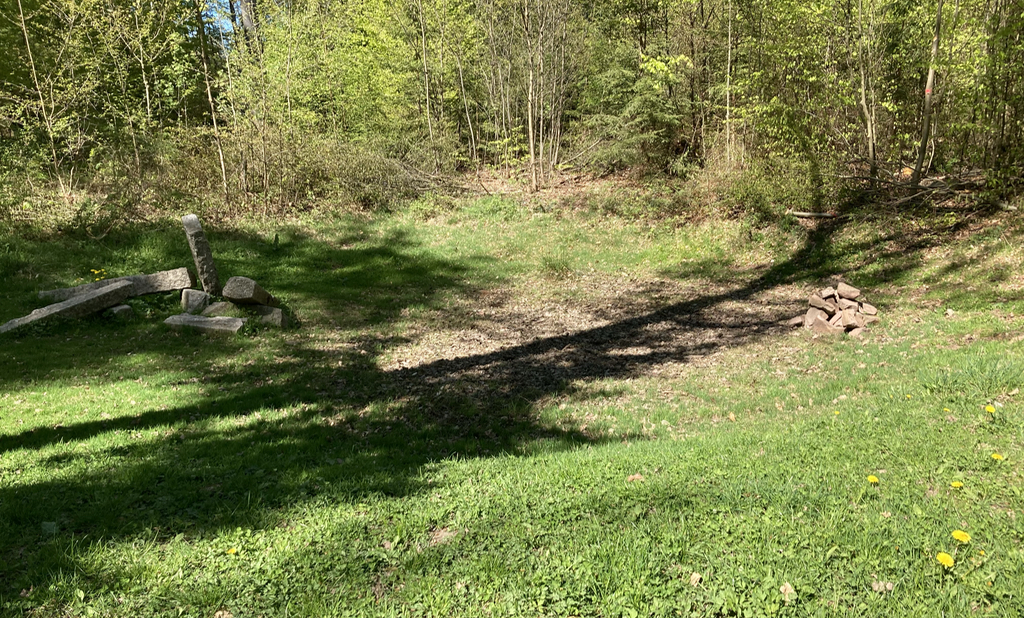
Shadow from unfortunate time of day – new photo expedition is planned.
A piece of cultural history: The Historic Ice Ponds
Do you know how food used to be preserved or kept cool during the warmer months, back when there was no electricity or fridges?
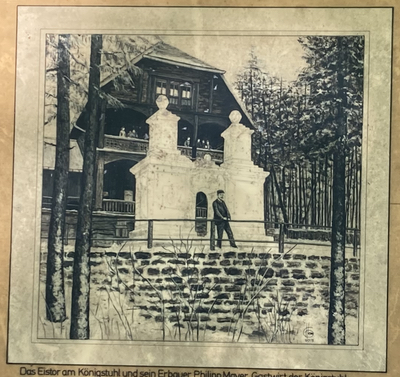 The ice pond at the Königstuhl and its builder, Philit pp Mayer, landlord of the Königstuhl restaurant, 1904. Illustration based on a photograph from the Heidelberg City Archives
For inns, such as the Königstuhlhotel, (Heidelberg) situated far from any supply sources, storing perishable goods was a particular challenge. Natural ice from winter was particularly important for storing food for long periods in deep cellars or tunnels.
Ice was sawed or broken out of natural ponds or specially prepared basins to be used for cooling. As the photo (right) shown here from the early 20th century illustrates, it could also be used as a clever marketing idea to create ice sculptures, which were intended to attract local residents and thus potential guests.
The two depressions (ice ponds) located near Eisweiherweg serve as a reminder of this era. They were created for the purpose of storing ice at a natural spring level with a constant flow of water.
It is astonishing to think that these are situated just a few metres below the summit of the Königstuhl. The historical name of the forest section, ‘Nasenplatz’ (wet place), alludes to this particular phenomenon.
New food refrigeration techniques rendered the ice ponds obsolete. The ponds were partially filled in and, as the water flow diminished, they remained as more or less damp patches in the forest.
On the initiative of the municipal forestry department, the area was re-excavated and the subsoil sealed, creating a space designed to promote and support biodiversity.