
 Clemens Beha
 ADAC Heidelberg Historic Classic car rally
The 30th ADAC Heidelberg Historic will take place from July 9 to 11, with over 180 classic cars taking to the road
The hub of the event is the Technik Museum Sinsheim
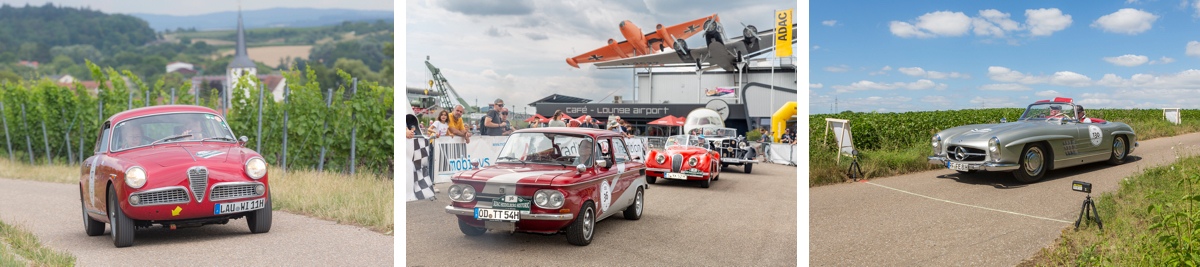
This year, the ADAC Heidelberg Historic’s “rolling museum” is exploring the regions around the world-famous city of Heidelberg and northern Baden-Württemberg for the 30th time. Since its debut as the “1st ADAC Rallye Nordbaden Classic” in 1995, it has grown into one of the largest and most exclusive classic car rallies in Germany. The event was put on hold only during the COVID-19 pandemic, which is why the anniversary can be celebrated only this year. Countless automotive treasures will come together from July 9 to 11, 2026: from pre-war vehicles to Group B rally cars. Over the past decades, the ADAC Heidelberg Historic has regularly featured the scene’s biggest names and numerous celebrities, including rally legend Walter Röhrl, Franziska van Almsick, and Horst Lichter. At this year’s anniversary event, another rally legend—Oda Lippmann, also known in rally circles as Oda Dencker-Andersen—will take to the starting line.
All 180 starting spots were snapped up within a few hours. The Technik Museum Sinsheim will serve as the hub for all three days. Spectators can get up close to the historic vehicles as early as July 9 during technical inspection in the museum courtyard, before the participants set off on the first day’s stage on July 10. At hosted stops along the route—which spans over 500 kilometers—spectators can take a closer look at these rare vehicles; the locations of these stops will be announced in the run-up to the rally. At the start of the first day’s stage, on July 10, the exact passage times for each town will be announced online.
 Clemens Beha / Marc Skribiak / Alexa Sinz
 The oldest vehicle is 114 years old
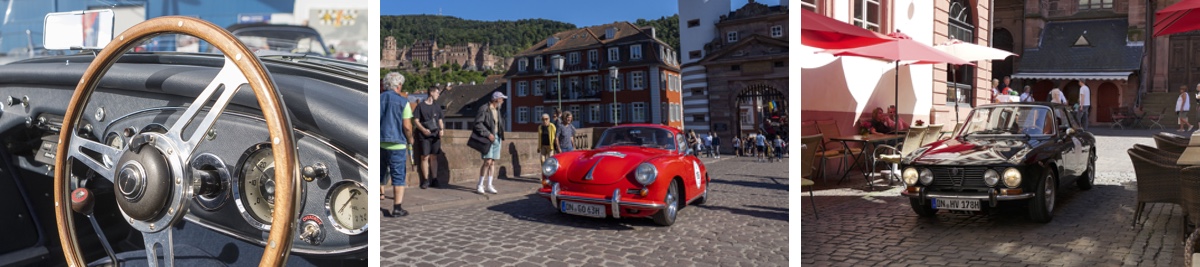
From living witnesses of the pre-war years to established everyday heroes of days gone by, all the way to sports cars and dream cars that were already highly sophisticated and technically advanced even back then: The ADAC Heidelberg Historic provides the ideal setting for a rolling automobile museum. Once again this year, the event features a vehicle with a history spanning over 110 years that made its debut at the ADAC Heidelberg Historic in 2025: the striking yellow Ford Model T Speedster. Manufactured in 1912 and specifically modified for racing in 1923, it was housed in a museum in the U.S. starting in 1926. Since the museum closed in 2023, owner Christian Mehl has been caring for this automotive treasure and, through painstaking attention to detail, ensuring that this vehicle can once again be admired on the roads.
Rally Legend on the Starting Grid
A special competitor will be behind the wheel this year of Walter Röhrl’s legendary Opel Commodore, the car he raced in the 1973 Monte Carlo Rally: Oda Lippmann. Born in Darmstadt, she entered the world of rally racing in 1964 and can look back on an impressive career. She received the trophy for her victory in the “Coupe de Dames” at the 1971 Monte Carlo Rally from Grace Kelly and Prince Rainier. She celebrated her most memorable victory in 1980 at what is arguably the most controversial event of all time: the Himalaya Rally, which was marked by angry crowds, attacks on the starting grid, and a military escort all the way to the finish line. There, Oda Dencker-Andersen—as she was known at the time—finished second overall—ahead of a certain Peter Lippmann, who placed sixth in the Himalaya Rally. Peter Lippmann, born in the Odenwald and once the North Baden Rally Champion, would go on to become Oda’s husband. This year, the two are teaming up in an Opel Commodore and looking forward to competing in the ADAC Heidelberg Historic.
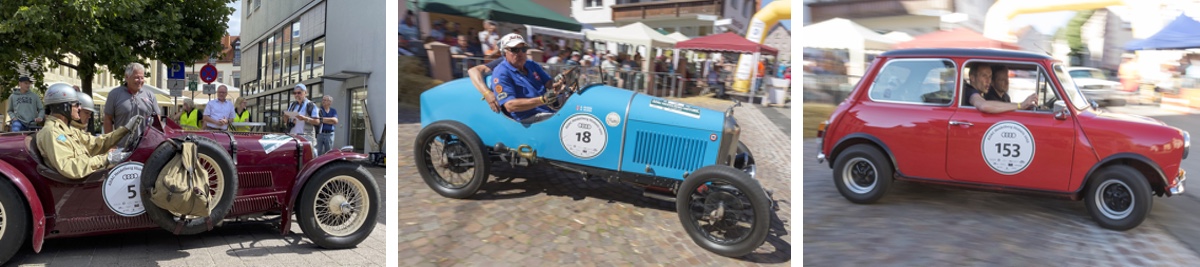
The ADAC Heidelberg Historic isn’t about speed, but about consistency. In regularity rallies, in addition to navigating the specified route using a roadbook, participants must also complete special stages. The roadbook contains a detailed description of the route, including special stages and checkpoints. The route is marked in the roadbook with simple symbols, known as “Chinese characters.” Every turn, every intersection, and every town entrance is marked with a symbol. The co-driver guides the driver by calling out these symbols—along with distance information and, in some cases, additional details—at the appropriate points along the route while the car is in motion. Unlike in modern time-trial rallies, the goal of these special stages is not to reach the finish line as quickly as possible, but to drive the route specified in the road book in exactly the prescribed time or at the prescribed average speed. For more information, visit www.heidelberg-historic.de
 Alexa Sinz / Clemens Beha / Clemens Beha
Further information on the Heidelberg Historic, the participating vehicles, and the supporting program can be found at www.heidelberg-historic.de